


I'll never forget a conversation I had with a business owner who over 25 years built a thriving manufacturing business. When he finally decided to sell, he was shocked to learn his company was worth 40% less than he'd assumed because the buyer pointed out risks he had never considered: the business was too dependent on him personally, key processes weren't documented, and his customer base was concentrated among just a few accounts.
Only 20-30% of businesses that go to market sell. Whether you're considering exiting your business in five years or ten, it’s important to do everything you can today to make it potentially sellable in the future. You can start planning a successful transition by understanding the Five Stages of Value Maturity. It could mean the difference between creating a legacy for you and your family and working indefinitely because your business won’t sell.
What Are the Five Stages of Value Maturity?
Running a company day-to-day and preparing it for maximum wealth extraction requires an entirely different skill set.
This methodology, developed as part of the Value Acceleration approach and detailed in Christopher Snider's book, Walking to Destiny, completely changed how I’ve been able to help business owners create a successful holistic wealth management plan. That’s why I decided to specialize in it.
Think of these five stages not as a one-time checklist, but as an ongoing cycle that strengthens your business and increases its worth over time:
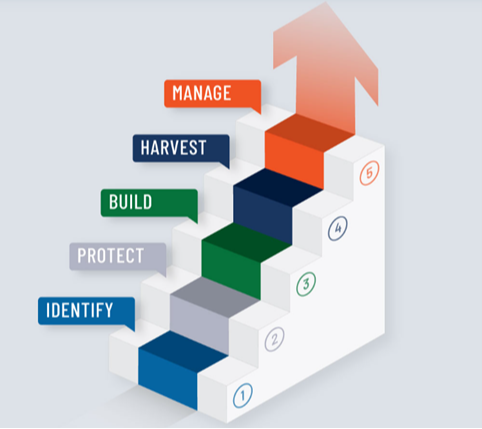
Stage 1: Identify Your Current Worth
It starts with identifying your current challenges and opportunities. If you're like most business owners, you have 70-80% of your net worth tied up in your business, yet many operate with outdated assumptions about their company's value.
The man in my story - let’s call him Robert - learned this firsthand when he assumed his manufacturing business was worth $4 million based on an old competitor's sale. A professional assessment revealed it was actually valued at $2.4 million—a gap that completely changed his retirement planning.
To get the complete picture, you need both a wealth gap assessment and a business risk assessment. This helps you understand what your company might be worth in today's market and identify specific opportunities that could enhance its value before a potential exit.
Stage 2: Protect Against the Identified Challenges in Step 1
Once you know what you have, you must protect it from the "5 D's"—death, disability, divorce, distress, and disagreement.
Protection means reducing your company's dependence on you personally and creating systems that enable the business to thrive in your absence.
Robert realized too late that a business that can't function without its owner is significantly less attractive and much riskier for potential buyers.
Stage 3: Build a More Valuable Business
Once you identify your unique challenges and opportunities and set guardrails in place to protect against them, you can focus on building your company’s value. By reducing your company’s risk profile, a business with an EBITDA of $500,000, which could have sold for $1.5 million, can easily be transformed into a valuable, transferable, and attractive business which could be sold for $3 million. The key is proactively focusing on improving your company’s "intangible capital" - your team, systems, customer relationships, and company culture.
Stage 4: Harvesting the Benefits of Your Labor
When it's time to harvest your wealth, you have multiple options beyond "sell to the highest bidder." You might transition the business to family members, sell to employees, merge with a strategic partner, or pursue other creative exit strategies.
But there's a crucial difference between what your business is worth on paper and what you'll actually receive after taxes and fees.
Stage 5: Manage Your Post-Sale Wealth
You've sold your business and suddenly have more money than you've ever had before. Now what? This stage is about creating a strategic plan for those proceeds so they can continue supporting your goals.
I've seen business owners celebrate the sale only to struggle with what comes next because they didn't have a wealth management strategy in place. We can help you develop investment approaches, explore tax-efficient strategies, and plan for income needs so you can pursue the retirement you’ve always envisioned. With proper planning, you may be able to create lasting wealth for future generations.
Why Starting Early Changes Everything
Here's something I wish every business owner understood: the earlier you begin implementing these stages, the more dramatic your results will be.
I've watched two similar clients—let's call them Michael and David—with comparable businesses. Michael started planning five years before his intended exit. David waited until the last minute. When they both sold, Michael walked away with nearly double what David received, despite having similar starting points.
More importantly, Michael enjoyed peace of mind throughout the process, knowing his family's future was secure.
Assess Your Business's Value Maturity
The Five Stages provide a proven roadmap, but every entrepreneur's journey is different. Whether you're just starting to think about what comes after your business or actively preparing for a transition, understanding where you currently stand can make an enormous difference in your results.
What would it mean to your family if you could add an extra million or two to your business sale? What would it feel like to have complete confidence in your exit strategy?
Ready to identify your wealth gap? Schedule a consultation with me to assess where your business currently stands and how to get it where you want it to go.